Adam Sicinski

Adam Sicinski is a qualified life coach whose passions extend into doodling, mind mapping and visual thinking. To find out more about Adam and his work, please visit adamsicinski.com.

how to seize lifes opportunities

How to Make the Most of Life’s Opportunities

Have you ever faced a problem that actually provided you with an opportunity to learn, grow and move forward in a better way? I’m sure we’ve all been there, however most of the time we fail to recognize these opportunities because we’re too transfixed on our problem. We worry, we fret, and we stress about the consequences of this problem, and subsequently fail to see the value of having this problem in the first place. As a result, we miss out on the real opportunities that life consistently presents us with. However, you need not miss out on an opportunity ever again by working through the following six steps.


1) CLARIFY YOUR GOALS

how to seize lifes opportunities

The first step to making the most of life’s opportunities is to know exactly what it is you want. In other words, what goals do you want to achieve? Having goals provides you clarity and helps you focus on your most important activities and priorities. However, simply knowing what you want unfortunately isn’t enough. You also need to understand what a potential opportunity looks like. More specifically, you need to clarify exactly what kind of opportunities you are looking for and how these opportunities can be of value to help move you toward the attainment of your goals.

2) MENTALLY PREPARE YOURSELF

how to seize lifes opportunities

Has anyone ever told you that opportunities are abound? I guess what they meant was that life is full of opportunities. However, how many of us are actually capable of taking advantage of the opportunities life throws our way? Statistically speaking, probably not a great many people. Most people are unfortunately ill-prepared for opportunities. They are ill-prepared because they simply don’t have the relevant knowledge, skills, support and tools at their disposal to make the most of opportunity. As a result, hasty and careless decisions are made that turn opportunities into insurmountable problems.

3) NETWORK WITH PEOPLE
how to seize lifes opportunities

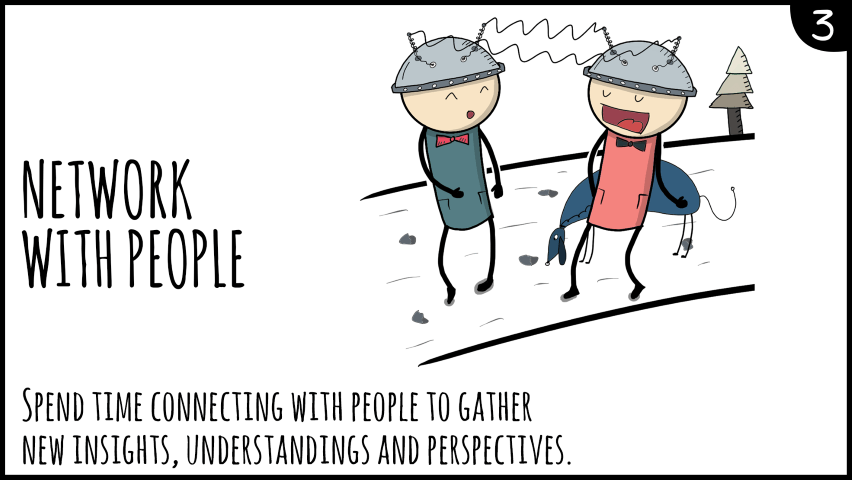
For a great many people opportunity comes in the form of a weekly lottery ticket. However, the odds of that ticket turning into a positive outcome are of course extremely slim. The truth is that real opportunities come through one single channel, and that channel almost always involves people. Yes, people are the one key factor that can help drive opportunity your way. It is often said that it’s not what you know, but rather who you know that matters. With this in mind, it’s important to regularly spend time connecting and networking with people who can potentially help you get ahead and achieve your goals.

4) QUESTION EVERYTHING

Making the Most of Every Opportunity

Opportunities don’t just suddenly appear in front of our eyes like the genie in Aladdin’s Lamp. Many times opportunities actually come to us in very covert ways — slipping right under the radar. In such instances it’s not about taking advantage of opportunity but rather about “opportunity creation”. And that’s of course where questions come into the picture. Asking questions that challenge you to think outside the box in creative ways stretches your imagination and encourages you to see things a little differently. Curiosity then becomes the driving force that helps you spot hidden opportunities in any situation.

5) RECOGNIZE THE OPPORTUNITY

how to seize lifes opportunities

For the most part, opportunities don’t come wrapped up in a gift basket. They rather come dressed in dirty overalls holding a shovel. In other words, life’s opportunities are often disguised as problems that require hard work and major emotional discomfort. And it is for this very reason why most people fail to recognize opportunities. They fail to recognize an opportunity because they expect opportunities to be given to them on a silver platter. If it ain’t easy, then it ain’t no opportunity but rather a distasteful set of tasks that require too much effort. And as a result, they fail to make the most of their situation.

6) TAKE CALCULATED RISKS

6 tips to create opportunities to develop yourself

Having recognized your opportunity, it’s now time to use it to your advantage. And many times of course, this does involve some degree of risk. Weigh up the pros and cons of your predicament and then choose to either act quickly — to make the most of this opportunity — or choose to move on. It’s up to you to decide whether or not an opportunity is truly worth taking. There are after all no guarantees. Your risks might not payoff in the end, but if you’re careful and calculated, they very much may. Remember though, that sometimes the true value of an opportunity lies in the choices left unmade.


CONCLUDING THOUGHTS

Many years from now when you reflect upon the journey you’ve taken, you may very well realize that everything you have accomplished effectively comes down to the choices you’ve made. You either chose to take advantage of that opportunity, or you chose to do something else. Either way, something happened and your entire life script was subsequently written on the canvas of the decision you made.

In the moment, we will of course never truly know where each of our choices will take us. That’s something we will eventually discover years down the track. Looking back, there may even be some regrets and disappointment, and most of them will probably be because of opportunities not taken, and choices not made.


Six Steps for Making the Most of Life’s Opportunities

Imagine for a moment you could develop new habits and methods of thinking where you naturally and effortlessly adopt these ideas into your life. How would that make you feel? Would you feel more fulfilled, empowered and in control?

Yes, there is such simplicity within this IQ Doodle, but of course there is a reason for that. Making positive change doesn’t need to be a complicated process. It just needs to be a consistent process where we progressively develop new habits-of-mind through repeated exposure and implementation. And that’s what these IQ Doodles are for.

We have prepared for you an IQ Doodle pack that includes several variations of this IQ Doodle that you can use for guidance and inspiration throughout the day. Use it consistently and you will begin making positive changes in the way you live, work and interact with others.

Visit the IQ Doodle Store to learn more about how to use this IQ Doodle and begin optimizing the way you live your life today.


Learn More About this Topic

Want to know more about this topic? Here are some helpful links to articles that you may find of value:


How to Make the Most of Life’s Opportunities Read More »

the game of life

Rules for How to Win at the Game of Life

What would you say separates high achievers from everyone else? What is it that they do, and what is it that they know that gives them such a superior advantage? Do they possibly understand things that the majority of people simply aren’t aware of? Just maybe life is kind of like playing a game, and these high achievers know the secret rules of this game and therefore understand how to play it to their advantage. But are these rules for winning the game of life really a big secret? Are they only bestowed to the chosen few? Well not today! Here are the six rules for winning at the game of life.


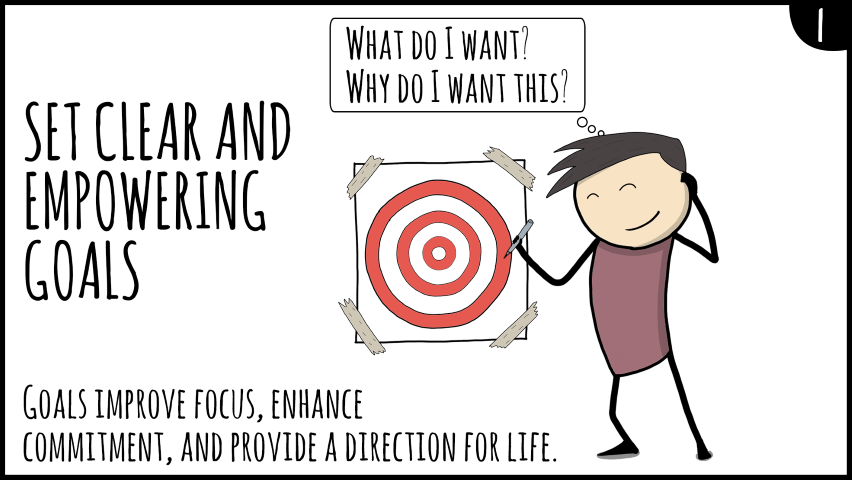
1) SET CLEAR AND EMPOWERING GOALS

How to Succeed and Win at the Game of Life

The first rule for winning the game of life is to set clear and empowering goals. Goals are of course important for a couple of reasons. Firstly, they help improve your mental focus. When you set goals you work with more urgency and purpose. In other words, they help provide you with a sense of direction for your life. As a result your mental focus is driven by the priorities you set that help you achieve those goals. Secondly, goals enhance your level of commitment and inspire passion. However, in order to fully commit yourself to this journey, you must clearly outline why you want to achieve these goals in the first place.

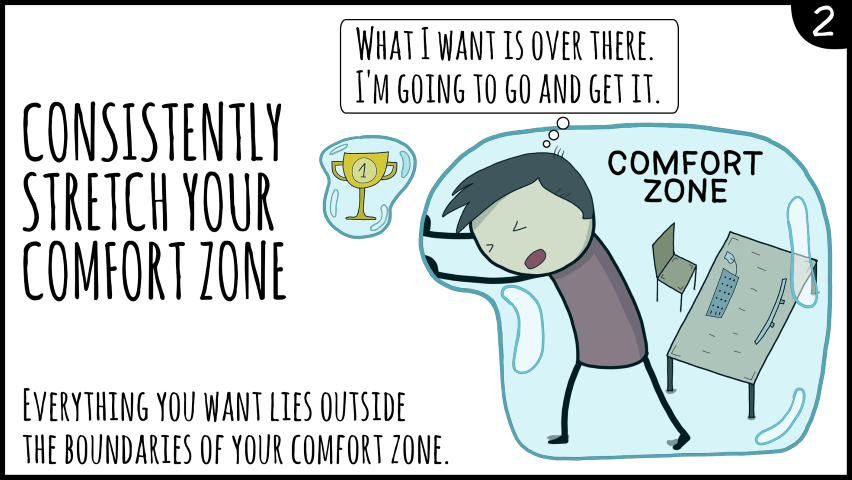
2) CONSISTENTLY STRETCH YOUR COMFORT ZONE

the game of life

The second rule for winning the game of life is to consistently stretch your comfort zone. This is of course important when it comes to goal achievement. After all, everything you want essentially lies outside the boundaries of your comfort zone. You will actually need to step outside your comfort zone to grab a hold of these goals. Unfortunately, a great many people simply don’t take this necessary step. They don’t take it because every goal comes riddled with problems that must first be overcome. However, little do they realize that overcoming these problems will stretch their comfort zone and move them closer to their prize.

3) GENERATE PLENTY OF BAD IDEAS

How to play The Game of Life

The third rule for winning the game of life is to generate plenty of bad ideas. As you stretch your comfort zone you will deal with a vast array of problems. Overcoming these problems may not be easy, and many times you might even be forced to think quickly on your feet. As a result you will make some poor choices that won’t seem to work in your favor. But that shouldn’t stop you from trying again, and again. Life is a number’s game. Don’t be afraid to repeatedly take a chance on yourself. The more times you try and fail, the higher the likelihood you will succeed the next time around.

4) MAKE MISTAKES AND LEARN FROM THEM

the game of life

The fourth rule for winning the game of life is to make mistakes and to learn from them. As you repeatedly try new things to overcome your problems, you are bound to make mistakes. Mistakes are simply a part of life, and a part of living that life. They are a natural part of the human experience, and we all of course make mistakes. However, those who don’t win at the game of life simply don’t take the time to learn from their mistakes. Life only rewards those who learn from the errors of their ways. It rewards those who treat every experience as a lesson that helps them move forward in a better way.

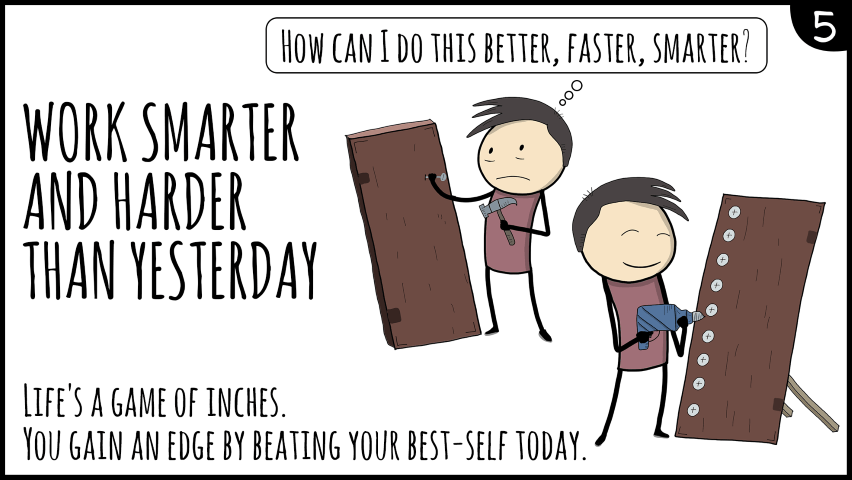
5) WORK SMARTER AND HARDER THAN YESTERDAY

How to Win the Game of Life

The fifth rule for winning the game of life is to work smarter and harder than yesterday. Those who make progress in life do so because they are constantly learning, growing and improving. They are building ever greater momentum toward their goals because they learn, adapt and upgrade their effort, skills, knowledge and methods. They clearly understand that in order to do better they must get better, think faster, and work smarter than the day before. They strive to make consistent improvements in a multitude of ways. Life is after all a game of inches. You gain an edge by beating your best-self today.

6) EXPOSE YOURSELF TO NEW IDEAS, PEOPLE AND PLACES

Life Rules: How do you play the Game of Life

The sixth rule for winning the game of life is to expose yourself to new ideas, people and places. We only grow and develop ourselves when we experience new things, when we learn something unique, and when we step outside the boundaries of our comfort zone. Expanding your horizons in this way provides you with new perspectives and opportunities for further growth and development. And as you grow, you gain ever deeper insights and understandings into your life and circumstances. You then grow wiser with the passage of time and subsequently make more optimal choices and decisions moving forward.


CONCLUDING THOUGHTS

As you can see, the rules for winning the game of life aren’t complicated, and they’re certainly not one of life’s great big secrets. We all know and understand these rules, but how many of us actually put these rules into practice?

A great many people don’t become high achievers because they are just not willing to put in the work to play the game of life as it was supposed to be played.

Yes, of course life isn’t all about rewards and accomplishments. But these rules are not just about that either. These rules are about challenging yourself to live your life to the fullest in the most optimal way possible, so that in the end, there are no regrets.


Six Rules for Winning at the Game of Life

Imagine for a moment you could develop new habits and methods of thinking where you naturally and effortlessly adopt these ideas into your life. How would that make you feel? Would you feel more fulfilled, empowered and in control?

Yes, there is such simplicity within this IQ Doodle, but of course there is a reason for that. Making positive change doesn’t need to be a complicated process. It just needs to be a consistent process where we progressively develop new habits-of-mind through repeated exposure and implementation. And that’s what these IQ Doodles are for.

We have prepared for you an IQ Doodle pack that includes several variations of this IQ Doodle that you can use for guidance and inspiration throughout the day. Use it consistently and you will begin making positive changes in the way you live, work and interact with others.

Visit the IQ Doodle Store to learn more about how to use this IQ Doodle and begin optimizing the way you live your life today.


Learn More About this Topic

Want to know more about this topic? Here are some helpful links to articles that you may find of value:


Rules for How to Win at the Game of Life Read More »

feeling less overwhelmed with life

What to do When Feeling Overwhelmed with Life

Are you feeling overwhelmed with life? Does it seem as though you just have too much to do and not quite enough time on your hands? Or maybe you’re feeling overwhelmed because you just have too many choices to make. Overwhelm is very much a state of emotional paralysis where you just feel as though you’re unable to handle or cope with the circumstances at hand. This entire experience fogs up your brain and prevents you from seeing things clearly. As a result you become crippled with indecision. However, things don’t necessarily need to be this way. Here are six steps for when you’re feeling overwhelmed with life.


1) RECOGNIZE OVERWHELM

six steps for beating overwhelm

The first step for when you’re feeling overwhelmed with life is to actually recognize and acknowledge the moment when you start feeling overwhelmed. Overwhelm is however something that kind of creeps up on us very slowly, then suddenly hits us like a firecracker. It often begins in a very subtle way by making us feel a little rushed. This pushes us out of our comfort zone and we progressively start losing control. What’s more is that we now no longer have the clarity we need to get stuff done, and as a result we become very negative and start complaining and blaming everyone and everything, but ourselves.

2) REMOVE YOURSELF FROM THE SITUATION

six steps for beating overwhelm

Having recognized that you’re feeling overwhelmed with life, it’s now time to take one long deep breath… then get-on-out-of-there and completely remove yourself from the situation. Yes, I actually mean walk away from the situation in the opposite direction. You cannot continue what you’re doing feeling this way. Remove yourself, and do it fast! The sooner the better. At least now you have the space to think things through more clearly. And your first thoughts must be directed at what exactly triggered your feelings of overwhelm. Identifying this trigger is the first step toward taking back control.

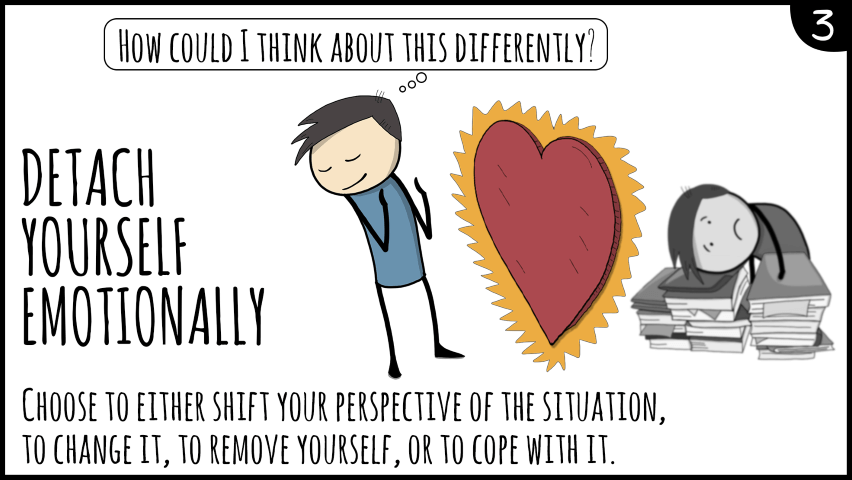
3) DETACH YOURSELF EMOTIONALLY

6 Things to Remember When You are Feeling Overwhelmed

Feeling overwhelmed with life is very much like a problem. You have this experience that you just can’t seem to handle, however you are only feeling this way because of how you’re viewing this situation. You will never find a solution to your problem if you’re emotionally invested within that problem. You must therefore separate your emotions from this experience and then challenge yourself to think things through a little differently. Specifically, you must decide to either shift your perspective of the situation, to change the situation, to remove yourself from the situation, or to figure out how to best cope with it.

4) TAKE PERSONAL INVENTORY

six steps for beating overwhelm

Let’s say that you decided to challenge yourself to try and work through this situation. Well in that case, it’s now time to take a personal inventory. A personal inventory is an acknowledgement of your personal strengths, knowledge, skills, tools and the support you have on hand to help you cope with this situation far more effectively. With all these things at your disposal you no longer need to succumb to feeling overwhelmed with life or with any particular situation. You just need to figure out how to make use of these resources to help you work through your predicament in an optimal way.

5) THINK THINGS THROUGH RATIONALLY

What to Do When Your Life Is Overwhelming You

Having taken a personal inventory, you should now understand where your strengths lie, and therefore you probably feel more capable of working through your feelings of overwhelm in this particular situation. Consider for a moment how you could utilize your time, skills, tools and the resources you have on hand to try and make things a little less overwhelming. Ask yourself how you could potentially work through your task more effectively and rationally. Possibly the solution lies in tackling your task in small pieces. Or just maybe there is a better way to do things that you hadn’t considered before.

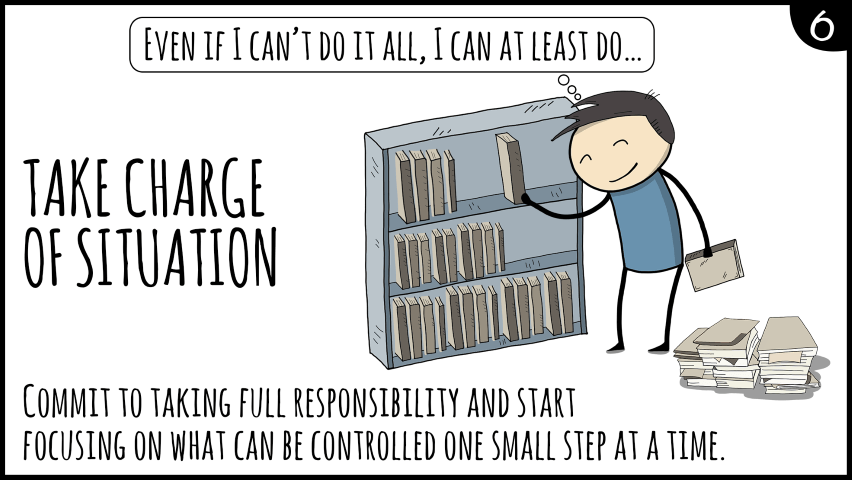
6) TAKE CHARGE OF THE SITUATION

Six Steps to Take When Feeling Overwhelmed with Life

No matter what solutions you come up with to your dilemma, it’s now time to take full responsibility and start moving forward. In other words, commit yourself to taking charge of the situation. Yes, there will be things and aspects that you still won’t be able to control. However, don’t allow these things to distract you from everything else that you can do right now. With this in mind, focus on what can be controlled and work through these tasks one small step at a time. Even if you can’t do it all, you can at the very least begin somewhere. Start small and slowly build momentum one mini-task at a time.


FEELING OVERWHELMED WITH LIFE SUMMARY

When we’re feeling overwhelmed with life we struggle to make optimal choices and decisions that can help us move forward in a better way. However, feeling overwhelmed is a conscious choice we make each and every day.

You and I choose how to respond to every situation we face. We can either respond in a helpful way that moves us forward, or in an unhelpful way that leaves us feeling stuck and emotionally paralyzed. 

You are much more resourceful than you realize. Tap into that resourcefulness and challenge yourself to never let overwhelm get the better of you in any situation ever again.


Six steps for feeling less overwhelmed


Imagine for a moment you could develop new habits and methods of thinking where you naturally and effortlessly adopt these ideas whenever you’re feeling overwhelmed with life. How would that make you feel? Would you feel more fulfilled, empowered and in control?

Yes, there is such simplicity within this IQ Doodle, but of course there is a reason for that. Making positive change doesn’t need to be a complicated process. It just needs to be a consistent process where we progressively develop new habits-of-mind through repeated exposure and implementation. And that’s what these IQ Doodles are for.

We have prepared for you an IQ Doodle pack that includes several variations of this IQ Doodle that you can use for guidance and inspiration throughout the day whenever you’re feeling overwhelmed with life. Use it consistently and you will begin making positive changes in the way you live, work and interact with others.

Visit the IQ Doodle Store to learn more about how to use this IQ Doodle for when you’re feeling overwhelmed with life, and begin optimizing the way you live your life today.


Learn More About this Topic

Want to know more about this topic? Here are some helpful links to articles that you may find of value:


What to do When Feeling Overwhelmed with Life Read More »

how to get over disappointment

How to Get Over Disappointment

So you’re feeling disappointed? It sure doesn’t feel good, but just maybe things aren’t as bad as they seem. Just maybe you can still get over disappointment. However, you of course don’t know that yet. You feel disappointed because of unfulfilled expectations. What you expected would happen, didn’t, and now you’re wallowing in disappointment and self-pity, and this is keeping you stuck and feeling absolutely miserable about yourself. It’s time to snap out of it, and wake up to the fact that disappointment is an incredibly useful emotion that can help you move forward in a better way.

1. STAY CALM AND COLLECTED

how to get over disappointment

Okay, something just happened that didn’t work out as you had expected, and now you’re feeling miserably disappointed. It’s okay. Let’s just stay calm and collected. Accept that disappointment is only a temporary condition that results from how you have chosen to interpret this experience. In other words, your perspective of the situation is what’s making you feel disappointed. Another person in your shoes might actually feel very different about what just happened. Let’s therefore not jump to conclusions. Let’s instead assume that things might just not be as bad as you make them out to be.

2. ACKNOWLEDGE HOW YOU’RE FEELING

how to get over disappointment

It’s of course perfectly okay to admit that you’re feeling disappointed. In fact, by accepting that you are feeling disappointed can help you to make better sense of the situation. Disappointment helps us to better assess what happened and how things could potentially have been different. With that in mind, consider what actually happened, what should have happened, and why you are feeling disappointed in this particular situation? Making sense of the situation in this way can help you to make peace with your feelings, which of course is a necessary step for getting over disappointment.

3. RE-EVALUATE YOUR EXPECTATIONS

6 Ways to Bounce Back After a Disappointment

Let’s just make it very clear that the only reason you are feeling disappointed right now, is because you have failed to meet your expectations of the situation. You possibly set all these high standards for yourself, and told yourself all these wonderful stories about what will happen and how you will feel afterwards. But unfortunately, things just didn’t work out as you had imagined. It’s time now to asses your expectations. Where they realistic and reasonable? Did they potentially set you up for disappointment? Honest answers to these questions will help you begin getting over disappointment.

4. RE-ASSESS THE SITUATION

how to get over disappointment

Yes, you’ve already acknowledged that you’re feeling disappointed. But is it possible that how you’re seeing things, and the story you are telling yourself about what just happened, isn’t the only interpretation you could make about this situation? Is it possible, that circumstances might not be as bad as you make them out to be? Just maybe there is some value to be found here. With this in mind, consider one positive thing you can take away from this situation. Maybe there is an opportunity here, or possibly there is a hidden lesson that can help you make better decisions moving forward.

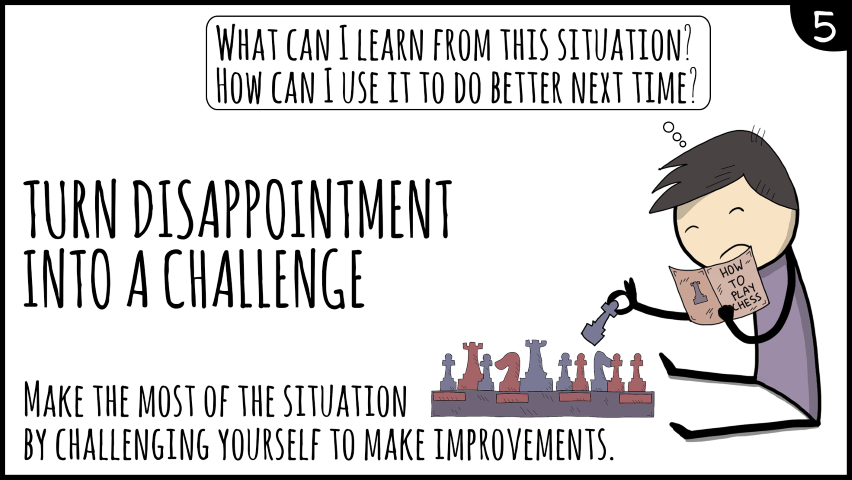
5. TURN DISAPPOINTMENT INTO A CHALLENGE

6 Tips for Getting Over Disappointment

In order to completely get over disappointment you need to find a valuable lesson in this experience. To do this, you must first identify what you are grateful for, and then search for a learning experience that makes you feel better and more hopeful about your predicament. Now take that learning experience and turn it into a challenge. Turn it into a challenge that motivates you to do better the next time around. But do keep in mind that the challenge you set must be somewhat within your control. Anything not within your control will only set you up for another disappointment.

6. MODIFY YOUR OBJECTIVE

Dealing with Disappointment

Moving on from the previous step, it’s important that you clearly outline a different objective that is within your personal control and that also plays to your personal strengths. Therefore, modify your objective, make sure it’s under your personal control and influence, and ensure that it works to your personal strengths and abilities. In other words, your goal must be aligned with the knowledge, skills and the resources you have at your disposal that you can then use to obtain your desired outcome. Checking off all these boxes will significantly reduce your chances of future disappointment.


CONCLUDING THOUGHTS

Getting over disappointment of course isn’t easy. It takes work and effort to consciously shift how we think and feel about a situation. It’s so difficult in fact, that many people prefer instead to wallow in their own self-pity, rather than making the effort to challenge how they view their own predicament. You are of course probably very different to most. You now clearly understand that disappointment is only a state-of-mind, and that getting over disappointment is something you can progressively work through. In fact, you now have all the knowledge you need to turn disappointment into an incredibly valuable and rewarding experience.


SIX STEPS FOR GETTING OVER DISAPPOINTMENT

Imagine for a moment you could develop new habits and methods of thinking where you naturally and effortlessly adopt these ideas into your life. How would that make you feel? Would you feel more fulfilled, empowered and in control?

Yes, there is such simplicity within this IQ Doodle, but of course there is a reason for that. Making positive change doesn’t need to be a complicated process. It just needs to be a consistent process where we progressively develop new habits-of-mind through repeated exposure and implementation. And that’s what these IQ Doodles are for.

We have prepared for you an IQ Doodle pack that includes several variations of this IQ Doodle that you can use for guidance and inspiration throughout the day. Use it consistently and you will begin making positive changes in the way you live, work and interact with others.

Visit the IQ Doodle Store to learn more about how to use this IQ Doodle and begin optimizing the way you live your life today.


Learn More About this Topic

Want to know more about this topic? Here are some helpful links to articles that you may find of value:


How to Get Over Disappointment Read More »

seasons of life

Adapting to the Seasons of Life

How do you typically deal with change? Do you tend to embrace it, or do you resist the changes that life throws your way? What if I told you that life is very much like the seasons. We go through our summers, autumns, winters and springs. Each of these seasons of life bring with them valuable lessons that we can use to help us move forward in a better way. Instead of resisting them, we can learn to embrace them and then use the seasons of life to help us live life in more optimal ways.


THE SEASON OF SUMMER

The season of summer is built upon good planning, solid decision-making, risk-taking, goal accomplishment, and a chance to capitalize on the opportunities that life sends your way. Summer is therefore a time for reward, fulfilment and celebration. It often inspires courage, confidence and passion.

Summer is the perfect time for expanding your comfort zone, for networking with interesting people, for travel, for leisure, for thinking creatively, proactively, and for taking massive action toward the attainment of your goals and objectives. It is a period in your life where everything you have been working toward during spring is now part of your life experience. All those new habits you built, the skills you developed, the knowledge you acquired, and all that hard work you put into achieving your goals has paid off, and you are now basking in the glory of everything you have managed to accomplish.

Consider for a moment what impact the summers have had on your life over a lifetime. Consider what they have taught you about yourself, about others and about living your life. Consider also how they have shaped and transformed your personality and built your character. What valuable lessons have you learned from the summer seasons of your life?

seasons of life

THE SEASON OF AUTUMN

The season of autumn is built upon pessimism, failure, hesitant action, unrealistic thinking, poor decision-making and a contracting comfort zone. Autumn is therefore a time for problems, mistakes and life transitions. It often unearths disappointment, stress and frustration.

Unfortunately the season of summer didn’t last. You made some poor choices and now you have all these problems on your hands. Possibly you failed to capitalize on opportunities that could have moved you forward in a better way. Or just maybe you made mistakes and things unfortunately just didn’t work out as you had expected. Anger, overwhelm and anxiety are driving you crazy as you try to navigate your way through massive disappointment. But even though you might not be in a good place right now, autumn brings with it the opportunity for transition and change.

Consider for a moment what impact the autumns have had on your life over a lifetime. Consider what they have taught you about yourself, about others and about living your life. Consider also how they have shaped and transformed your personality and built your character. What valuable lessons have you learned from the autumn seasons of your life?

seasons of life

THE SEASON OF WINTER

The season of winter is built upon poor habits, ineffective choices, critical thinking and an inner desire for personal transformation. Winter is therefore a time for planning, self-reflection and hibernation. It often unearths regret, fear, and grief. And yet, there also seems to be a little hope for a better future.

The season of autumn was obviously very difficult. The awkwardness of that period of your life led to the development of poor habits that have brought you here to this very moment. You now fully understand the impact of all your poor choices and the failures and mistakes that pulled you out of the glorious season of summer. Yes, none of this feels good, but it’s not supposed to. You are in a significant transition period of your life. Deep self-reflection and planning is exactly what you need to get your life back on track. It’s time now to think realistically and thoughtfully about the foundations you must build to move your life forward.

Consider for a moment what impact the winters have had on your life over a lifetime. Consider what they have taught you about yourself, about others and about living your life. Consider also how they have shaped and transformed your personality and built your character. What valuable lessons have you learned from the winter seasons of your life?

seasons of life

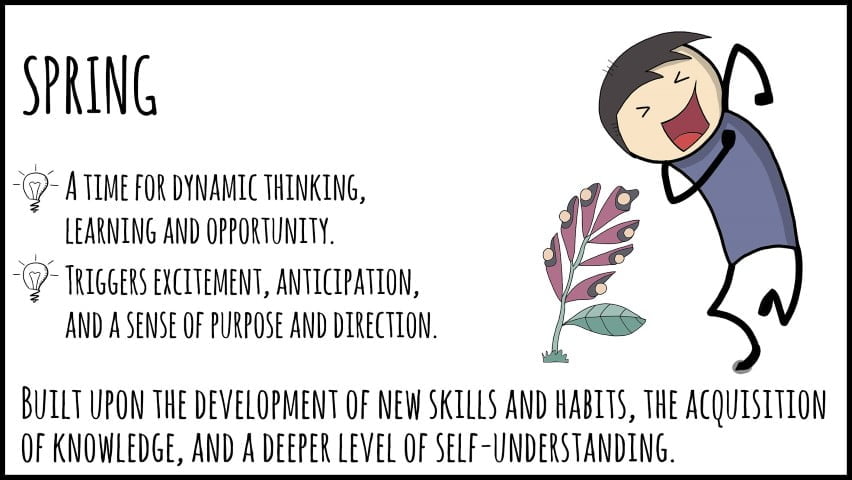
THE SEASON OF SPRING

The season of spring is built upon the development of new skills and habits, the acquisition of knowledge, and a deeper level of self-understanding. Spring is a time for dynamic thinking, learning and opportunity. It often triggers excitement, anticipation and a sense of purpose and direction.

During winter you built the foundations for spring. The time you spent on self-reflection and planning have helped shift and transform how you think about yourself and about your life. Moreover, this period of self-reflection has awakened within you a burning desire that now propels you forward. You have found your energy and swag once again, and are excited to learn new things and expand your understanding and awareness. Spring is a season where you start building empowering routines and habits that support incredible and challenging new goals that move you forward with great energy and enthusiasm.

Consider for a moment what impact the springs have had on your life over a lifetime. Consider what they have taught you about yourself, about others and about living your life. Consider also how they have shaped and transformed your personality and built your character. What valuable lessons have you learned from the spring seasons of your life?

seasons of life

CONCLUDING THOUGHTS

We move through the seasons of life many times over the course of a lifetime. These seasons follow a natural cycle and rhythm that helps us to learn, grow, and to better understand ourselves on deeply profound levels of awareness. We can then use these insights to help us make better choices and decisions as we transition from one stage of life to another — naturally and effortlessly moving through the seasons of life.


Adapting to the seasons of life

Imagine for a moment you could develop new habits and methods of thinking where you naturally and effortlessly adopt these ideas into your life. How would that make you feel? Would you feel more fulfilled, empowered and in control?

Yes, there is such simplicity within this IQ Doodle, but of course there is a reason for that. Making positive change doesn’t need to be a complicated process. It just needs to be a consistent process where we progressively develop new habits-of-mind through repeated exposure and implementation. And that’s what these IQ Doodles are for.

We have prepared for you an IQ Doodle pack that includes several variations of this IQ Doodle that you can use for guidance and inspiration throughout the day. Use it consistently and you will begin making positive changes in the way you live, work and interact with others.

Visit the IQ Doodle Store to learn more about how to use this IQ Doodle and begin optimizing the way you live your life today.


Learn More About this Topic

Want to know more about this topic? Here are some helpful links to articles that you may find of value:

Adapting to the Seasons of Life Read More »

How to stop anxiety

How to Overcome Anxiety

Do you get anxious when facing the unknown? Do you struggle to keep your emotions in-check? We all experience anxiety from time-to-time. It’s something that many of us just accept and live with. But it doesn’t need to be this way. We can all learn how to overcome anxiety using six simple steps. These six steps will show you how to deal with anxiety and how to control anxiety far more effectively. Use these steps to take charge of those anxious moments that hold you back from being yourself.


1. RECOGNIZE SYMPTOMS OF ANXIETY

stress and anxiety symptoms

Anxiety typically manifests as an unpleasant feeling you have about uncontrollable and unavoidable circumstances. It’s an uneasiness you have about a future filled with possible threats and negative experiences. Typical symptoms of anxiety include trouble concentrating, irrational worries, dizziness, sweating, tension and irritability. Recognizing the symptoms of anxiety helps you become aware of what’s happening and how you are responding to circumstances. And awareness is of course the first step to positive change and transformation.

2. OBSERVE YOUR BEHAVIOR

how to cope with anxiety

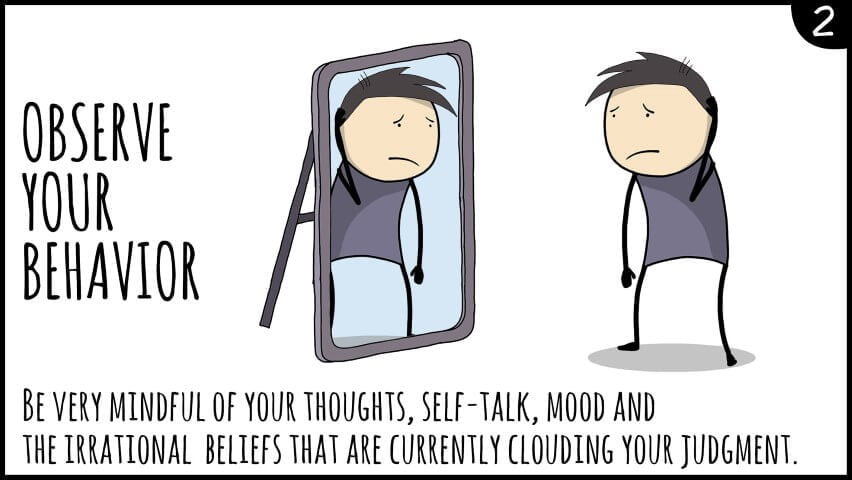
Overcoming anxiety requires being very mindful of your thoughts, of your self-talk, of your mood and of the irrational beliefs that are currently clouding your judgement. It’s important that you acknowledge that you are seeing and interpreting things a certain way, and this is subsequently causing you to feel anxious. How you are thinking about this situation, how you are talking to yourself about these events, and what you believe about your predicament influences your mood. Use mindfulness to become an observer of the workings of your inner world.

3. FOCUS ON THE PRESENT MOMENT

6 Effective Ways to Fight Anxiety

Having become conscious and aware of your inner world, it’s now time to settle yourself within the present moment. Close your eyes and focus on the rhythm of your breath and begin concentrating on all the things that are within your control. Ask yourself: What’s working for me? What’s within my direct control? Overcoming anxiety requires that you let go of the past, ignore the future, and just settle on the one thing that you can control right here, right now. You are far more resilient and resourceful than you realize. Just focus and be in the moment.

4. PUT THINGS INTO PERSPECTIVE

how to relieve anxiety

Having settled yourself into the moment, it’s now time to openly acknowledge and recognize that your anxiety is a direct result of how you are imagining this situation. You are very likely imagining a very bleak and troublesome future. And it’s these imaginings that are causing you to feel anxious about your predicament. To change how you feel you must shift your perspective of the situation and throw doubt on your beliefs. Ask yourself: How do I know that what I’m imagining will actually happen? How could it potentially become a positive experience?

5. OPTIMIZE YOUR BODY LANGUAGE

How to Cope with Anxiety

To overcome anxiety you must now break your emotional pattern, and the best way to do that is through optimizing your body language. Recognize that how you use your body affects how you feel at any given moment. To break this emotional pattern you need to snap yourself into a more optimal state-of-mind. To do this, begin by straightening your back, putting a big smile on your face, talking with confidence and moving with purpose. Move your body as though you are feeling confident and self-assured. It’s impossible to feel anxious when moving this way.

6. START TAKING CONTROL

Overcoming anxiety

You are now in an optimal state-of-mind to start taking control of your anxiety attacks. However, overcoming anxiety can be challenging at times. It’s a difficult emotion that can very quickly overwhelm you. With this in mind, it’s important to progressively train yourself to work through your feelings of anxiety gradually in small doses over time. One way to do this is through the process of visualization. Visualizing the unfamiliar circumstances in advance can help inoculate you against anxiety. Simply visualize yourself handling the situation in a calm manner, over and over again.

CONCLUDING THOUGHTS

Using these six steps on how to overcome anxiety will help you to progressively work through your feelings of anxiety. Dealing with anxiety of course isn’t easy, but it’s possible to work through your feelings as long as you are open and willing to move through each step of this process. Overcoming anxiety will of course take practice. But over time you will develop a new habitual pattern that will help you to overcome your feelings of anxiety in more optimal ways.


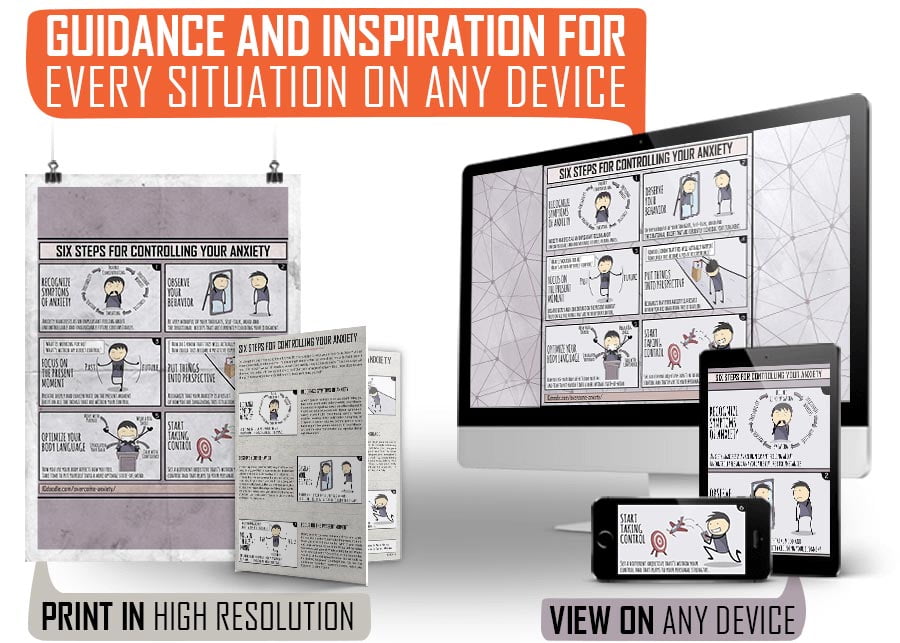
Six steps for controlling your anxiety

Imagine for a moment you could develop new habits and methods of thinking where you naturally and effortlessly adopt these ideas into your life. How would that make you feel? Would you feel more fulfilled, empowered and in control?

Yes, there is such simplicity within this IQ Doodle, but of course there is a reason for that. Making positive change doesn’t need to be a complicated process. It just needs to be a consistent process where we progressively develop new habits-of-mind through repeated exposure and implementation. And that’s what these IQ Doodles are for.

We have prepared for you an IQ Doodle pack that includes several variations of this IQ Doodle that you can use for guidance and inspiration throughout the day. Use it consistently and you will begin making positive changes in the way you live, work and interact with others.

Visit the IQ Doodle Store to learn more about how to use this IQ Doodle and begin optimizing the way you live your life today.


Learn More About this Topic

Want to know more about this topic? Here are some helpful links to articles that you may find of value:


How to Overcome Anxiety Read More »

Swapping Lives

Swapping Lives with Richard Branson…

There are always plenty of excuses for not doing the things that will move us closer to our goals. There is for instance never enough time, or there is a lack of money, or you just don’t have the necessary support you need to pursue your goal. You have so many excuses on your plate that of course it’s no surprise you aren’t making any progress.

The truth of the matter is that there are always going to be excuses. There are always going to be reasons why we just can’t or won’t do something. These reasons exist because we live with very little urgency. With no urgency there is a lack of desire and motivation to move forward. Instead we get distracted by short-term pleasures that are just too enticing to pass up in the moment. And then there’s our goal. It’s just so big and far off in the distance. Yes, you want it, but maybe you’re just not willing to do what it takes to achieve it.

Every goal you set requires something from you. It requires that you make the necessary sacrifices to achieve that goal. The sacrifices you make come in the form of time, energy and maybe even money. However, even with these sacrifices there are still no guarantees of success. That’s why it can be so difficult to keep ourselves motivated over the long haul. At least that’s how life is for the average person.

Let’s change pace for a moment…

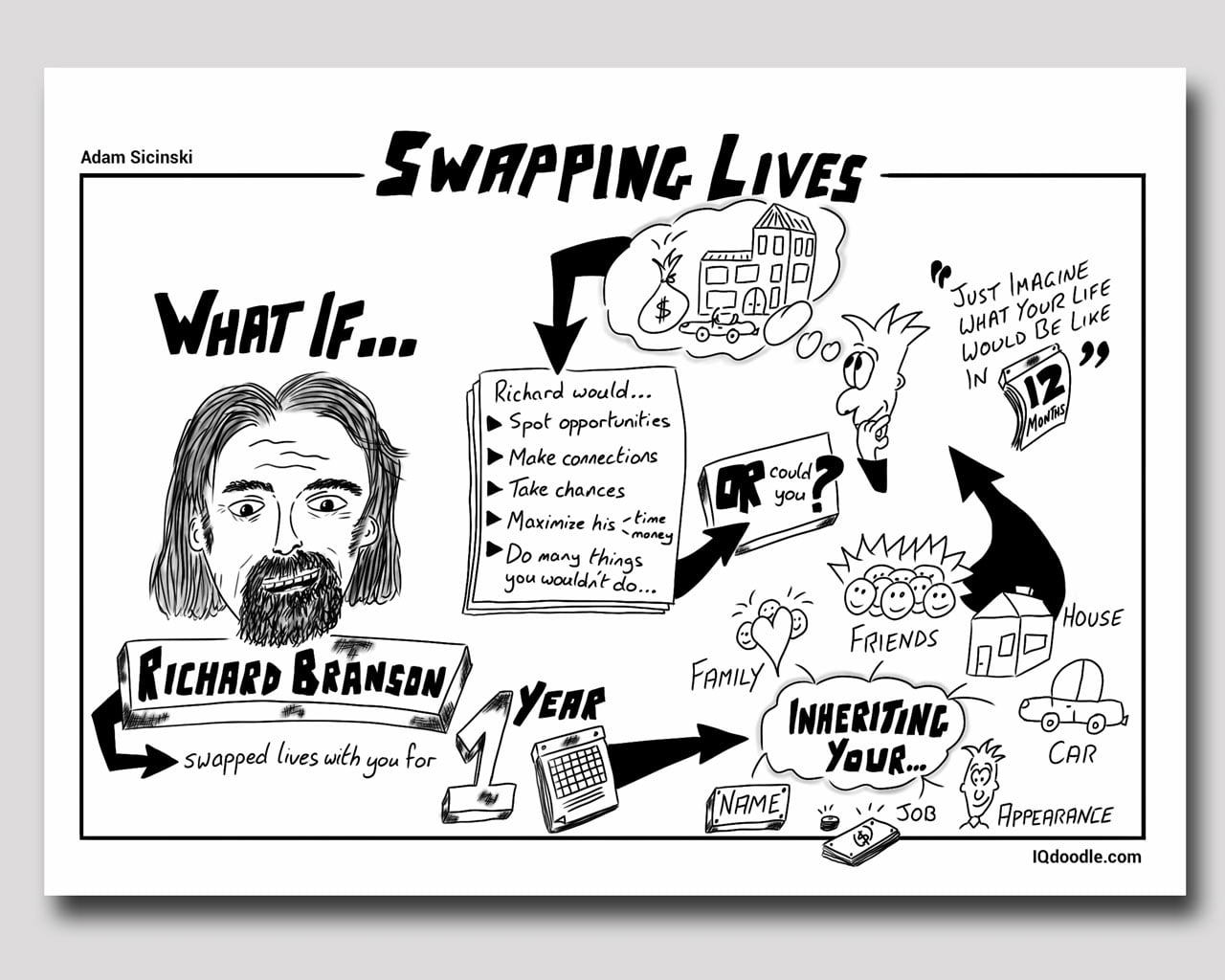
Just imagine Richard Branson swapped lives with you for one whole year. That is 12 months or 365 days. Actually it’s also 8,765 hours or to be more specific 525,949 minutes. For exactly that period of time Richard Branson would swap lives with you. He would inherit your name, your job, your house, your car, your family, your friends, your goals and aspirations, and let’s say he miraculously also inherits your appearance.

For 525,949 minutes of that one full year Richard Branson lives your life and gains access to all the resources you currently have at your disposal. He is basically YOU with a different attitude and perspective. Just imagine after 12 months what your life might be like when Richard Branson hands it back to you? Do you think things would be somewhat different? What specifically?

Over those 12 months Richard Branson wouldn’t waste a minute. He would completely turn your life around because he would spot opportunities you would have missed; he would make connections you would have overlooked; he would take risks you would have feared; he would maximize his time, money and available resources in order to achieve your goals. In fact, he would do many things you probably wouldn’t do… or could you?

On the flipside, how would you manage Richard Branson’s billion dollar empire over a period of 12 months? Would Richard Branson be better off or would his empire lie in ruins?

It’s certainly interesting to think this way about life and about how other people might manage things if they swapped lives with you. It really brings the decisions we make and the actions we take into full perspective?

Of course you might very well be experiencing unthinkable adversity right at this very moment. But you certainly aren’t alone. In fact, Richard Branson and just about every person who has achieved great things in this world did so despite adversity. For them adversity was an opportunity to learn, grow and do things better to help move them forward towards their goal. However, for the average person adversity is only another excuse that gets them nowhere.

The honest truth is that how Richard Branson managed your life over a period of 12 months is exactly how you could manage your life over the next 8,765 hours. Don’t spend another one of your 525,949 minutes procrastinating and waiting for the perfect moment to act. If Richard Branson wouldn’t spend his time waiting, then nor should you.

Action Points

Whenever you feel your life stagnating with things not moving forward as expected, take some time to imagine yourself as Richard Branson. Ask yourself:

  • What would Richard Branson do in this situation?
  • How would Richard Branson think about this problem?
  • What opportunities would Richard Branson spot here?
  • What necessary risks would Richard Branson take to move this forward?
  • What connections would Richard Branson try to make?
  • How would Richard Branson best utilize his time right now?

Yes, of course you’re not Richard Branson, however you can still think and act like Richard Branson, and that by itself can make a world of difference. Why not just give it a try?

IQ Matrix Maps

Here are links to complementary IQ Matrix posters that go into more depth about this topic:

Download 30+ Free Self-Growth Posters

Swapping Lives Read More »

Good Luck, Bad Luck?

[button href=”https://iqdoodle.com/wp-content/uploads/2014/06/good-luck-iq-doodle-wd-background.jpg” icon_size=”5″ class=”” target=”” color=”flat” dimension=”small” icon=”None” animation=”” animate=”” animation_delay=”0″ ]Wide background[/button] [button href=”https://iqdoodle.com/wp-content/uploads/2014/06/good-luck-iq-doodle-sd-background.jpg” icon_size=”5″ class=”” target=”” color=”flat” dimension=”small” icon=”None” animation=”” animate=”” animation_delay=”0″ ]4:3 background[/button] [button href=”https://iqdoodle.com/wp-content/uploads/2015/05/good-luck-iq-doodle.pdf” icon_size=”5″ class=”” target=”” color=”flat” dimension=”small” icon=”None” animation=”” animate=”” animation_delay=”0″ ]PDF[/button]

[space height=”30″]

Good luck, bad luck? Who knows…

Have you ever felt as though the world was conspiring against you? Have you ever wondered why you have such rotten luck, why nothing you do ever works out, or why you just can’t catch a break? If you feel this way, then you certainly aren’t alone. In fact, there are many people out there who feel exactly as you do. They feel as though the world is out to get them — unable to break the cycle of bad luck that seems to be shadowing them everywhere they go.

But what is bad luck really? And is it really as bad as it seems?

Bad luck, good luck or anything in between is nothing more than a situation we find ourselves in. This situation is actually neutral by nature. It doesn’t have any bad or good luck associated with it. We instead give each situation meaning as a result of how we interpret the events and circumstances.

The meaning you assign to a situation depends on your perspective of that situation and on the short and long-term view you take of that situation. And this of course will vary from person to person.

There is nothing good or inherently bad about anything that happens to us, we just make it one way or another based on the questions we ask ourselves when we get caught up in that moment.

The questions you ask yourself can either lead to self-pitty and self-loathing, or they can lead to confidence, excitement and anticipation for what’s to come. It just all depends on the mental attitude you bring to every situation you find yourself in.

Steve Jobs once said that:

“You can’t connect the dots looking forward; you can only connect them looking backwards. So you have to trust that the dots will somehow connect in your future. You have to trust in something – your gut, destiny, life, karma, whatever. Because believing that the dots will connect down the road will give you the confidence to follow your heart even when it leads you off the well worn path; and that will make all the difference.”

In other words, what Steve Jobs means is that you can’t pre-judge events or circumstances because in that moment you have a very limited perspective of what this situation might lead to in the future. What might seem as bad luck right now, may actually turn out to be a blessing in disguise. However, you’re unable to see that at this moment because it’s impossible to connect all the dots looking forward.

All the adversity, problems and setbacks you face might not seem pleasant or fair, but in the long-term — in the bigger scheme of things — isn’t it safe to say that it’s way too early to make that judgment call? Unless you have prophetic powers, then you don’t really know whether or not your circumstances are due to bad luck. Just maybe it’s good luck, but you won’t know until days, weeks, months or even years into the future when you look back and connect all the dots. And for that reason it’s important not to jump to quick conclusions about how things are and how they ought to be.

And since you don’t know the long-term effects of these situations, it’s therefore important to keep an open mind. In fact, what might appear to be good luck today might turn south very quickly and ruin your life in a few years time. You just never know.
Have a think about all the seemingly bad things that have happened to you over the years. Looking back at them today, has anything good eventually come from these situations? Also consider all the seemingly good things that happened over the years. Did any of them lead to unfortunate circumstances weeks, months or even years into the future?

The lesson in this is to refrain from judging something as being good or bad, because you just never know the chain reaction of events this situation has triggered. Your bad luck may turn good just as easily as your good luck may turn bad. Who really knows?

[youtube video_id=”5mHYePoXy8Qo” width=”640″ height=”300″ ]

Action Points

The next time you are faced with a seemingly unlucky situation, take some time to ask yourself:

  • What’s something good I can take away from this situation?
  • How could this potentially be a lucky turn of events?
  • What positive outcomes can result from this in the future?
  • What valuable lessons can I take from this situation?
  • How can I make the best of this situation moving forward?

Whether you experience good luck or bad luck, the best way to approach it is to ask yourself, “Good luck, bad luck… who knows?” Just make the best from every situation and keep an open mind about the future.

IQ Matrix Maps

Here are links to complementary IQ Matrix posters that go into more depth about this topic:

  • The Luck Factor: Explores what luck really is and how to have more of it in your life.
  • Feeling Lucky: Will help shift your perspective about what you think is lucky and unlucky.
  • Remarkable Work Ethic: Luck is all about work ethic. The harder you work the luckier you may get.
  • Take Responsibility: Luck tends to favor those who take responsibility for their life and circumstances.
  • Quit Complaining: Those who complain rarely get lucky because complainers only focus on problems.

Download 30+ Free Self-Growth Posters

Good Luck, Bad Luck? Read More »

Overcoming Limitations

[button href=”https://iqdoodle.com/wp-content/uploads/2014/06/overcome-limitations-iq-doodle-wd-background.jpg” icon_size=”5″ class=”” target=”” color=”flat” dimension=”small” icon=”None” animation=”” animate=”” animation_delay=”0″ ]Wide background[/button] [button href=”https://iqdoodle.com/wp-content/uploads/2014/06/overcome-limitations-iq-doodle-sd-background.jpg” icon_size=”5″ class=”” target=”” color=”flat” dimension=”small” icon=”None” animation=”” animate=”” animation_delay=”0″ ]4:3 background[/button] [button href=”https://iqdoodle.com/wp-content/uploads/2015/05/overcome-limitations-iq-doodle.pdf” icon_size=”5″ class=”” target=”” color=”flat” dimension=”small” icon=”None” animation=”” animate=”” animation_delay=”0″ ]PDF[/button]

[space height=”30″]

Overcoming Your Personal Limitations…

A baby elephant is born into the world. It’s young and naive. The world is new and every experience is enthralling. It is at this age that the baby elephant learns most about itself and about its limitations within this world.

It is said that elephants are one of the most intelligent animals on the planet. This may be true, but even the most intelligent creatures succumb to the process of conditioning.

Just imagine for a moment an elephant trainer at a circus trying to control a 10,000 pound animal. The elephant has so much mass and strength that it could walk all over its trainer and do whatever it pleases. But it doesn’t. The elephant doesn’t rebel against its trainer for one reason. And this all has to do with the conditioning it received as a youngster.

Training elephants must begin at a young age, because when they’re young they are very impressionable and the trainer can therefore use this time to teach them how to do certain tricks and follow simple commands. But the greatest discovery about training elephants has nothing to do with the ticks they perform, but rather with the method trainers use to subdue an elephant’s movement.

Consider this for a moment: A 10,000 pound adult elephant has a thin flimsy chain tied around one of its legs. This chain is attached to a tiny wooden peg that has been nailed into the ground. Who in their right mind would think that this could prevent an adult elephant from escaping? It doesn’t seem possible, does it? But it works.

The adult elephant could very easily offer just minimal resistance and pull the wooden peg out of the ground in an instant. But he doesn’t resist. He doesn’t resist because he believes that resistance is futile. He believes that he simply just doesn’t have the strength to break free of that flimsy chain. But why?

When he was a baby the elephant trainer used the same wooden peg and flimsy chain to keep the elephant from escaping. However, back then the baby elephant wasn’t strong enough to break free from its shackles. Yes, he certainly tried escaping. In fact, he tried, tried and tried, but to no avail. The chains were too strong and he soon realized that resistance was futile. There was no escape because the shackles wouldn’t budge. And so he eventually just accepted his fate and never tried escaping again.

Today as an adult he could easily break free of those chains. He’s certainly strong enough. But because of past conditioning he simply doesn’t believe he’s strong enough, and therefore never even attempts to escape.

This adult elephant is stuck within his self-imposed limitations. He has all the potential in the world to break free, but his limiting beliefs about the situation prevent him from even trying.

In many ways you, me, all of us are just like this adult elephant. We are trapped by our own limiting beliefs and past conditioning. Yes, of course we all have untapped strength and potential within ourselves. And yet we keep holding ourselves back based on what exactly? Based on experiences we had as a child.

As a child you had a plethora of experiences. Some were of course empowering and helped you get ahead in this world, but others were unhelpful — creating a set of limiting beliefs and perspectives about yourself, others and the world around you. Now, of course you were very impressionable back then and had a different view of the world. But now you’re an adult, and yet you’re still living your life based on old beliefs and perspectives that aren’t helping you get ahead in this world today.

Don’t you think it’s about time you broke free of those flimsy chains?

[youtube video_id=”HYPTmNEIy10″ width=”640″ height=”300″ ]

Action Points

Consider for a moment the limiting beliefs that are holding you back, and ask yourself:

  • How are my limiting beliefs holding me back in life?
  • What childhood perspectives no longer serve me today?
  • What boundaries do my limiting beliefs and perspectives put on me?
  • What must I begin believing about myself, others, my circumstances or the world around me to break free of these boundaries?
  • How must I shift my view of the world to break free of these flimsy chains?

Your limitations are only limitations of the mind based on past conditioning you received when you were younger. These limitations are not real, they are rather only figments of your own imagination.

IQ Matrix Maps

Here are links to complementary IQ Matrix posters that go into more depth about this topic:

Download 30+ Free Self-Growth Posters

Overcoming Limitations Read More »

Overcoming Obstacles

[button href=”https://iqdoodle.com/wp-content/uploads/2014/06/overcome-obstacles-iq-doodle-wd-background.jpg” icon_size=”5″ class=”” target=”” color=”flat” dimension=”small” icon=”None” animation=”” animate=”” animation_delay=”0″ ]Wide background[/button] [button href=”https://iqdoodle.com/wp-content/uploads/2014/06/overcome-obstacles-iq-doodle-sd-background.jpg” icon_size=”5″ class=”” target=”” color=”flat” dimension=”small” icon=”None” animation=”” animate=”” animation_delay=”0″ ]4:3 background[/button] [button href=”https://iqdoodle.com/wp-content/uploads/2015/05/overcome-obstacles-iq-doodle.pdf” icon_size=”5″ class=”” target=”” color=”flat” dimension=”small” icon=”None” animation=”” animate=”” animation_delay=”0″ ]PDF[/button]

[space height=”30″]

Don’t Let Anything Stand In Your Way…

Every goal you set comes with a price. That price is the sacrifice of your time, energy and the mental resources you need to overcome all the obstacles that stand between you and your goal.

Often the bigger and more audacious the goal the harder you will need to work to achieve it, and the more resistance you will subsequently face. After all, if achieving this goal was easy then everyone would do it, right?

Often the average person looks for the easiest possible route. They look for the shortcut that will get them to their goal in quick succession.

They pursue this goal with zest and passion and then suddenly face an unexpected obstacle in the form of a brick wall. The wall presents a problem that prevents them from moving forward. Now, of course this brick wall is not infinite in size. It’s finite and there are certainly ways to move around it. However, the average person in their haste only sees one way around the wall… through an invisible door that will magically open on their command.

The average person expects that the path towards their goal comes in the form of a straight line with no obstacles or nasty surprises. “How naive”, you might think; and you would be right.

The world doesn’t give us our goals on a silver platter. The world instead places obstacles in the form of big, thick, dirty, scary brick walls that test our resolve. In fact, life will always place brick walls along your path. These brick walls come with no invisible doors that will magically open on your command. No, they have a different purpose. They are designed to toughen you up for the journey that lies ahead.

This is why the average person quits. They quit the moment they come across a brick wall. They will of course first look for the easy way through it. However, after a quick search they realize that there are no magical invisible doors. This is of course disappointing, however they are not yet discouraged. Just maybe if they keep banging into the wall it will eventually crumble. And so they keep banging into the wall again and again doing the same thing but expecting a different result. Eventually the pain of their throbbing head gets too much to bear, and so they quit without even giving a second thought to alternative ways they could have conquered that wall.

We’ve all been there. We’ve all no doubt been that average person looking for the quick way through that invisible door. We’ve all banged our heads one too many times on a wall that would not budge. Yes, as much as it hurts, we’re all guilty of the same crime against our goals. But things don’t need to be this way… things can be very different.

That brick wall standing between you and your goal is by no means insurmountable. It was placed there to challenge you, to test your creativity, and most importantly to ward off those who don’t want this goal as badly as you.

In a ways your goal has certain barriers to entry. These barriers to entry prevent anyone and everyone from attaining this goal. Only those who want the goal badly enough, and only those who use their ingenuity, skill, knowledge, experience, energy and creativity in the right way will achieve it.

By overcoming this obstacle you join an exclusive club of individuals who have conquered that same brick wall. Of course, some of these individuals found a way over the wall, others found a way under it, while you might have found a way to sidestep it. It really doesn’t matter. We all conquer our brick walls in different ways, it just takes a little finesse and imagination to get around them.

[youtube video_id=”VpM1Gta9VW0″ width=”640″ height=”300″ ]

Action Points

When you reach a brick wall, stop for a moment and consider what it means. Look at it from a distance and see it for what it is. Identify its strengths and weaknesses, and then determine what might be the best course of action moving forward to help you conquer this obstacle.

During moments such as these, you might find it helpful to ask yourself:

  • What is it specifically that I am facing?
  • What do I know about this obstacle? What must I find out?
  • Why did this obstacle show up in my life at this very moment?
  • What is this obstacle trying to teach me?
  • How is this obstacle trying to challenge me?
  • Have I ever faced a similar obstacle? How did I overcome it?
  • How have others overcome this obstacle?
  • What’s the best way around this obstacle?

Whether it’s over, around or under, you will find a way through. A little creativity and imagination always goes a long way.

IQ Matrix Maps

Here are links to complementary IQ Matrix posters that go into more depth about this topic:

  • Conquering Obstacles: Provides you with insights that will help shift how you think about obstacles.
  • Overcoming Obstacles: Helps you to better understand and overcome the obstacles in your life.
  • Life is an Experiment: When it comes to overcoming obstacles it helps to see life as an experiment.
  • Life is a Game: Approaching your obstacles in a playful way can help you overcome them.
  • Bouncing Back: When you’re defeated by an obstacle you need to know how to bounce right back.

Download 30+ Free Self-Growth Posters

Overcoming Obstacles Read More »

error: Content is protected !!
Scroll to Top